
The Glucose Diaries: What My CGM Revealed About My Biology
contents
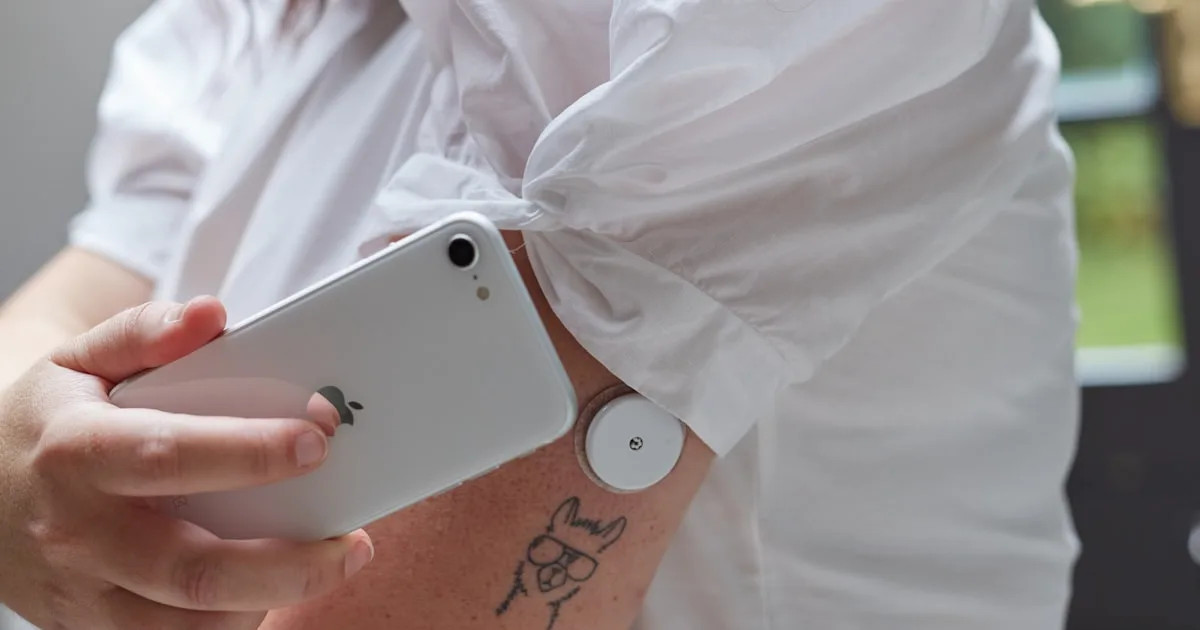
I’m not diabetic. I don’t have prediabetes. I wore a continuous glucose monitor for six weeks because I was curious — and because I have enough of a biology background to suspect the data would be interesting.
It was.
Nine thousand, five hundred and fifteen readings later, I’ve got a dataset that tells stories I never expected to see about my own body. The most surprising one? My glucose rises during weightlifting and falls during a run, and those two facts trace back to completely different physiological mechanisms. My liver was doing things I’d read about in textbooks and never thought I’d actually observe in myself.
This post walks through seven moments I found interesting in my data. I’ve built an interactive visualization where you can explore the full dataset yourself, and each section below links to the exact time window.
TL;DR — Key Takeaways
- Anaerobic exercise (weights, basketball) raises blood glucose via catecholamine-driven hepatic glycogenolysis, the opposite of what most people expect. In a November 2025 controlled study (CGM-HYPE, PMC), healthy young adults showed a mean +28.7 mg/dL excursion during anaerobic exercise vs. just +8.8 mg/dL during aerobic.
- Normoglycemic adults spend only 1.3% of their time above 180 mg/dL (JCEM Framingham cohort, n=560, September 2024). My Mother’s Day spike hit 182 mg/dL, at the exact statistical edge of normal for a high-carbohydrate festive meal.
- Short bouts of walking after eating activate insulin-independent glucose uptake via GLUT4 translocation in skeletal muscle, the same mechanism as aerobic exercise and measurably visible on a postprandial glucose trace (Buffey et al., 2022).
Why Lifting Weights Raises Your Blood Sugar
Most people assume exercise drops blood glucose. It does, but only for one kind of exercise. During my two weightlifting sessions (May 6, 13:49–14:39 and June 9, 13:44–14:18), my glucose rose by +21 and +23 mg/dL respectively, peaking about 20–30 minutes into the session before gradually resolving.
That rise isn’t a malfunction. It’s your liver doing exactly what it’s supposed to do under catecholamine signaling.
What’s happening in the liver
When you pick up heavy weights, your sympathetic nervous system fires. Norepinephrine and epinephrine surge; exercise researchers have confirmed that during high-intensity exercise, circulating catecholamines can increase 10- to 20-fold above resting levels (PMC, Exercise and Hepatic Metabolism, 2016). At that concentration, control of hepatic glucose production shifts away from pancreatic hormones (insulin and glucagon) and over to the adrenal glands.
The liver receives the catecholamine signal and breaks down stored glycogen, a process called hepatic glycogenolysis. Glucose floods the bloodstream. The working muscles can’t absorb it fast enough during a short, intense bout, and circulating levels climb accordingly. This transient hyperglycemia resolves within 30–60 minutes once the catecholamine surge fades, hepatic output slows, and muscle glucose uptake finally catches up with the sudden supply.
In November 2025, the CGM-HYPE study (n=10 healthy young adults) measured a mean anaerobic exercise glucose excursion of +28.7 ± 21.46 mg/dL (p=0.0228). My observed +21–23 mg/dL is slightly below that mean, which makes sense. Their protocol was a standardized anaerobic bout, while my gym sessions are real-world and less maximal.
This is one of the clearest places where my data matches published literature, and one of the few times I’ve been able to say “the textbook mechanism is actually visible in my own body.”
Why Running Lowers It Instead

My two morning runs told the opposite story. On May 25 (06:52–07:20) and June 3 (06:49–07:15), my glucose fell by −14 and −11 mg/dL respectively over the course of a ~25-minute run.
The mechanism here is different in a really interesting way. It’s not primarily about catecholamines. It’s about a protein called GLUT4.
GLUT4 and insulin-independent glucose uptake
Normally, glucose enters skeletal muscle cells by hitching a ride with GLUT4 transporters, which are inserted into the cell membrane in response to insulin. That’s the insulin signal most people know about.
But during aerobic exercise, muscle contraction itself triggers GLUT4 translocation, no insulin required. It’s a completely different mechanism. The muscle opens a side door that bypasses the hormonal lock entirely, and sustained aerobic effort simultaneously increases skeletal muscle glucose demand so substantially that the bloodstream drains faster than the liver can refill it (GSSI Sports Science Exchange #263).
During steady-state aerobic effort, the catecholamine surge isn’t as dramatic as during maximal anaerobic work. So the liver isn’t getting the same aggressive glycogenolysis signal, and the glucose curve slopes gently downward.
In the CGM-HYPE study, aerobic exercise produced only +8.8 ± 4.91 mg/dL net excursion vs. the +28.7 mg/dL for anaerobic, and the aerobic trace is directionally flat or slightly downward. Elite cyclists in the GSSI Sports Science Exchange #263 (May 2025) maintained mean in-ride glucose around 108 ± 9 mg/dL with minimum in-ride values averaging 74 ± 10 mg/dL.
My −11 to −14 mg/dL drops fit neatly in that pattern. Not dramatic, but visible and directionally consistent.
The Post-Meal Walk: What I Actually Saw in the Data
The CGM made this one viscerally clear in a way that the textbook description never quite did.
The mechanism is the same GLUT4 translocation described in the running section. Skeletal muscle contraction drives glucose uptake independent of insulin. What changes is the context: after a meal, postprandial glucose is already rising, and even light walking intercepts that curve on its way up. A 2022 systematic review and meta-analysis in Sports Medicine found that interrupting post-meal sitting with short bouts of light-intensity walking reduced postprandial glucose by roughly 17% on average, with considerable variability across studies (Buffey et al., Sports Medicine, 2022).
I found the timing question more interesting than I expected. The postprandial peak for most mixed meals lands between 45 and 75 minutes after eating. A walk in that early window intercepts the rising curve; a walk two hours later, after glucose has already peaked and started falling, has a much smaller effect. Seeing that in my own data (the curve bending noticeably on evenings when I took a walk after dinner versus evenings when I sat on the couch) made the physiology feel concrete in a way it hadn’t before.
Basketball and the Adrenaline Dump
My basketball session on June 7 (17:26–18:22) produced the single largest glucose excursion in my dataset: 71 → 105 mg/dL, a +34 mg/dL rise over about 56 minutes.
That’s larger than either weightlifting session. And it makes physiological sense.
Basketball is intermittent high-intensity sport. The rapid direction changes, sprint bursts, jumps, and defensive pressure create a catecholamine surge that exceeds what a standard gym session produces. Adrenaline (epinephrine) spikes sharply in response to the competitive context, not just the physical effort. The liver gets an aggressive glycogenolysis signal and releases glucose into the bloodstream in anticipation of maximal energy demand, even if the demand doesn’t always materialize that quickly.
According to the GSSI Sports Science Exchange #263, professional football players routinely spend significant time above 180 mg/dL during intense match play. This is a normal feature of high-intensity sport, not a metabolic anomaly.
My +34 mg/dL exceeds the CGM-HYPE anaerobic lab mean of 28.7 mg/dL, which tracks. A controlled anaerobic protocol in a lab is, in every sense, measurably less stressful than a real basketball game. The adrenaline context of actual competition is part of the signal.
The Mother’s Day Spike: A Family Lunch at the Edge of Normal
On Mother’s Day (Sunday, May 10), roughly between 11:00 and 15:00, my glucose hit 182 mg/dL. It was the highest single reading in the entire dataset. (spike window | full day)
That day involved a multi-course family lunch, the kind of high-carbohydrate eating that doesn’t happen on a normal Tuesday. The result was a postprandial excursion that, while unusual for me, sits right at the boundary of what’s statistically expected.
In September 2024, the JCEM Framingham Heart Study cohort (n=560 normoglycemic adults) reported that healthy people spend only 1.3% of their time above 180 mg/dL. My 182 mg/dL is at the very edge of that envelope, unusual for me but physiologically explicable given the context.
Dexcom’s own reference data places post-meal glucose in healthy non-diabetics typically below 140 mg/dL, citing average postprandial peaks around 132.3 ± 16.7 mg/dL (Stelo/Dexcom, What Should My Glucose Levels Be). Treating that as a manufacturer-reported benchmark rather than an independent study finding, a 182 mg/dL reading is roughly 3.0 standard deviations above that mean. Not pathological, but a statistical outlier.
Fasting Days: What Glucose Looks Like Without Food

My two fasting periods (May 11–14 and June 7–10) produced the flattest, lowest traces in the dataset. Without food, there are no postprandial spikes. The main driver of glucose variability is simply absent.
What you see on a fasting day is the liver operating at its baseline metabolic rate. Small amounts of glucose are continuously released via low-level glycogenolysis to maintain blood glucose in the 80–100 mg/dL range. Glucagon from the pancreatic alpha cells gently stimulates this process, while insulin suppression reduces glucose uptake in peripheral tissues, preserving circulating levels for glucose-dependent organs like the brain. The brain gets what it needs.
In a 2024 study of 16 non-diabetic participants during intermittent religious fasting (PMC, Nutrients, August 2024), time-in-range, mean sensor glucose, and glycemic variability (CV and SD) were all stable. Caloric restriction did not worsen glycemic control, and the reduction in spike frequency made the trace visually flatter and more regular.
Glucose variability is mostly a food story. Most of the amplitude in a typical day’s trace comes from meals. The fasting days looked almost boring by comparison, which, after six weeks of looking at spiky postprandial curves, I found oddly satisfying.
When Readings Drop Below the Floor
The Dexcom Stelo has a measurement floor of 70 mg/dL. When glucose falls below this threshold, the device displays <70 in the tooltip. On two occasions in my dataset, May 22 and June 4, the device hit that floor.
Both events happened near the end of a sensor’s lifecycle. A pattern I noticed with these sensors: as a unit approaches the end of its usable life, readings become increasingly unreliable: spotty signal, erratic values, and sub-70 readings that may be sensor degradation rather than true hypoglycemia. Whether these two events represent genuine exercise-induced glucose drops or a dying sensor floor-clamping, I can’t say definitively. The timing, alongside heavy exercise days, makes either explanation plausible.
For context on what real exercise hypoglycemia looks like in non-diabetics: according to the GSSI Sports Science Exchange #263, approximately 3% of CGM readings in non-diabetic athletes fall below 70 mg/dL, and even high-volume endurance athletes can experience nocturnal hypoglycemia episodes below 47 mg/dL between 3–7 AM after heavy training days. It does happen. But the sensor-lifecycle explanation is at least equally credible here.
This is one of the messier parts of consumer CGM data: real physiological events and hardware artifacts can look identical on a chart.
Overnight Stability: Your Baseline Revealed
The flattest, most consistent part of any 24-hour glucose trace is the overnight window. No food, minimal movement, low-level metabolic maintenance. The liver quietly releases small amounts of glucose to keep circulating levels stable while you sleep.
Overnight glucose in healthy non-diabetics clusters around 100–106 mg/dL with minimal variance. The CGM-HYPE study found a mean overnight glucose of 102.26 ± 5.72 mg/dL in healthy young adults, compared to a daytime mean of 107.57 ± 7.22 mg/dL, lower, narrower, and detectably flatter.
The dawn phenomenon: a diabetic finding, not a universal one
A common CGM discussion topic is the “dawn phenomenon,” a pre-waking glucose rise driven by morning cortisol. It’s real, but primarily a diabetic and prediabetic finding. In healthy non-diabetics, the overnight cortisol rise doesn’t produce a measurable glucose excursion large enough to be clinically significant. The NIH StatPearls definition places the clinical threshold at ≥20 mg/dL rise from nocturnal nadir. That magnitude simply isn’t what you see in a healthy metabolic state.
The CGM-HYPE study found no detectable dawn phenomenon signal at either 3:00 AM or 5:00 AM in healthy young adults. My overnight traces are similarly quiet.
Looking at overnight windows was the most useful orienting move in the whole dataset. It’s the cleanest window I found for seeing what my glucose looks like stripped of the noise from food, stress, and exercise: the metabolic floor, with nothing added on top. May 15 overnight (10 pm – May 16, 7 am) is a representative example.
What “Normal” Actually Looks Like
Before wearing a CGM, I had a vague sense that healthy glucose meant something like “not diabetic.” The data gave me a more precise picture.
In September 2024, the JCEM Framingham Heart Study published CGM data from 560 normoglycemic adults. Their findings:
- Mean glucose: 114.5 mg/dL (median 111.6 mg/dL)
- Time in 70–180 mg/dL range: 97.8% of the day
- Time above 180 mg/dL: 1.3%
- Time below 70 mg/dL: ~0.9%
That’s a very tight band. Nearly all of a healthy non-diabetic’s glucose time sits between 70 and 180, with the bulk of it between 80 and 140. The excursions (meals, exercise, stress) are real but bounded.
Across 9,515 readings and six weeks, my dataset sits comfortably within that envelope except for a handful of outlier moments. The Mother’s Day spike at 182 mg/dL, the exercise-induced floor events: these are the edges of the distribution, not departures from it.
A Note on the Hardware
The Stelo is rated for up to 15 days per sensor. I bought two 2-packs through a third-party supplier, got a replacement pack after early failures, enough for what should have been roughly three to four months of coverage. Each sensor lasted an average of about 5 days before failing or losing signal.
I mention this because it shapes everything about the dataset: the gaps, the artifact readings, the calibration noise near sensor transitions.
It also explains something you’ll notice in the dataset: there are gaps. Not because I stopped wearing the device, but because each failed sensor meant a window of no data between removal and getting a new one placed. The chart has clusters of dense readings interrupted by flat stretches. Those breaks map almost perfectly to sensor transitions.
The calibration window
There’s a less obvious data artifact too. Every new CGM sensor goes through a warm-up period (typically 30–60 minutes after placement) during which the interstitial glucose readings are less reliable as the electrochemical sensor stabilizes against the surrounding tissue. This is normal and expected, but it means the first hour of data after each sensor change should be read with some skepticism.
The Stelo uses a factory-calibrated algorithm rather than requiring fingerstick calibration, which is convenient, but the accuracy-over-sensor-lifetime curve still exists. Fresh sensors and dying sensors both produce noisier data than a mid-lifecycle sensor operating in its optimal window. Any unusual spike or drop in the dataset near a visible data gap is a candidate for sensor artifact rather than a real glucose event. I’ve flagged the ones I’m confident about in the chart annotations.
All readings are included in the dataset, including the post-placement windows, rather than trimmed. The moments highlighted here were all captured mid-lifecycle, well away from sensor transitions. The biology in those sections is clean.
Try It Yourself
All seven of these moments are visible in the live interactive chart. Each data point is timestamped and annotated with exercise events. You can zoom into any window, share the exact view, and see the glucose curve in context.
Windows worth starting with:
- Weight training vs. running: May 6 (13:49–14:39) for the lifting spike, then May 25 (06:52–07:20) for the running dip.
- The basketball session: June 7, 17:26–18:22, the biggest single excursion in the dataset and the most visually dramatic trace of the lot.
- A fasting day: May 11–14. Compare it to a normal eating day directly alongside it and watch variance drop.
- Overnight windows: May 15, 10 pm – May 16, 7 am. No food, no exercise. Just the liver’s maintenance rhythm, which turns out to be surprisingly flat and regular.
Frequently Asked Questions
These are the questions I’ve been asked most after sharing this data.
Does exercise always lower blood sugar?
Not always. It depends on the type. Aerobic exercise (running, cycling) gradually lowers blood glucose through GLUT4-mediated insulin-independent uptake. Anaerobic exercise (weightlifting, sprints, burst sports) often raises it first by 20–35 mg/dL via catecholamine-driven hepatic glycogenolysis, before normalizing within 30–60 minutes. In the November 2025 CGM-HYPE study, anaerobic excursion (+28.7 mg/dL) was significantly larger than aerobic (+8.8 mg/dL) in healthy adults.
What is a normal postprandial glucose in a non-diabetic?
Post-meal glucose in healthy non-diabetics typically peaks below 140 mg/dL. Dexcom cites average postprandial peaks around 132.3 ± 16.7 mg/dL (Stelo/Dexcom, 2024–2025), though this figure comes from their own reference data rather than an independent peer-reviewed study. The September 2024 Framingham cohort (n=560) found normoglycemics spend 97.8% of their time between 70–180 mg/dL. Readings above 180 mg/dL are at the statistical edge for a healthy person.
Why does glucose go below 70 mg/dL during exercise, and how do you know it’s real?
You often don’t, with a consumer CGM. Genuine exercise-induced hypoglycemia does occur in non-diabetics; the GSSI estimates approximately 3% of CGM values fall below 70 mg/dL in non-diabetic athletes. But sensor degradation near end-of-lifecycle can produce the same reading. The two events in my dataset happened on heavy exercise days that also coincided with a sensor approaching the end of its usable life. Both explanations are plausible, and the data alone can’t separate them.
Sources
- Defining CGM Time in Range in a Large Community-Based Cohort Without Diabetes — JCEM, Framingham Heart Study, September 2024, retrieved 2026-06-16
- CGM-HYPE: Continuous Glucose Monitoring in Healthy Young People — PMC, PLOS Digital Health, November 2025, retrieved 2026-06-16
- Continuous Glucose Monitoring Use in Athletes Without Diabetes — GSSI Sports Science Exchange #263, May 2025, retrieved 2026-06-16
- Exercise and the Regulation of Hepatic Metabolism — PMC, NIH, 2016, retrieved 2026-06-16
- Twenty-Four Hour Glucose Profiles During Intermittent Fasting in Non-Diabetics — PMC, Nutrients, August 2024, retrieved 2026-06-16
- Dawn Phenomenon — NIH StatPearls, retrieved 2026-06-16
- What Should My Glucose Levels Be — Stelo by Dexcom, retrieved 2026-06-16 (manufacturer reference data, not independent peer review)
- The Acute Effects of Interrupting Prolonged Sitting Time in Adults with Standing and Light-Intensity Walking on Biomarkers of Cardiometabolic Health — Buffey et al., Sports Medicine, 2022, retrieved 2026-06-16